
Bone loss is one of the most common concerns for people considering full mouth dental implants. Many patients have been missing teeth for years or have worn dentures, which can lead to significant changes in the jawbone over time.
Having bone loss does not automatically mean full mouth dental implants are not possible, but it does play an important role in how treatment is planned.
For a broader look at eligibility, it helps to start with the full picture:
Who is a good candidate for full mouth dental implants?
Why Bone Loss Happens After Tooth Loss
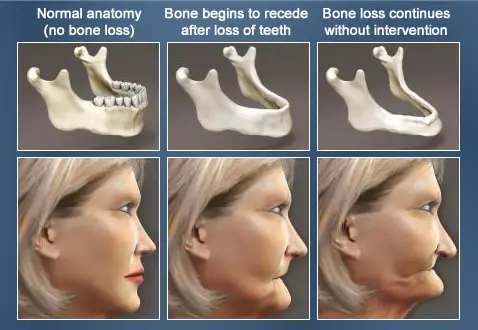
When teeth are missing, the jawbone no longer receives the stimulation it needs to maintain its shape and density. Over time, this can lead to bone shrinkage, especially in patients who have worn dentures for many years.
Bone loss can vary widely from person to person and may affect:
- Bone height
- Bone width
- Bone density
The extent and location of bone loss help determine what treatment options are available.
Does Bone Loss Automatically Disqualify You?
No. Many patients with bone loss can still receive full mouth dental implants.
Candidacy depends on:
- How much bone remains
- Where the bone loss is located
- Whether stable implant placement can be achieved
Some patients may not qualify for traditional implant placement but may still be candidates for alternative approaches.
How Implant Techniques Can Help With Bone Loss
In certain cases, the way implants are placed can make treatment possible even when bone loss is present. Some full-arch techniques are designed to use available bone more efficiently rather than relying on bone volume alone.
One approach that is often discussed in these situations is All-on-4 dental implants, which uses angled implants to maximize existing bone and, in some cases, reduce the need for bone grafting.
What are All-on-4 dental implants?
When Bone Grafting May Be Considered
In some cases, bone grafting or other preparatory procedures may be recommended to improve implant support. These treatments are used to rebuild or strengthen areas of the jaw before implants are placed.
Whether grafting is necessary depends on:
- Severity of bone loss
- Overall health
- Desired treatment timeline
Not every patient with bone loss requires bone grafting, and not every patient is a good candidate for it.
When Bone Loss May Limit Treatment Options
Severe, widespread bone loss can make implant placement more challenging. In some situations, full mouth dental implants may not be recommended if implant stability cannot be achieved safely.
Understanding these limitations helps patients avoid unrealistic expectations and explore appropriate alternatives when necessary.
Who is not a good candidate for full mouth dental implants?
How Bone Loss Fits Into the Overall Decision
Bone loss is one of several factors considered during a full mouth implant evaluation. It is rarely evaluated on its own and is instead considered alongside overall health, healing ability, and long-term goals.
A comprehensive examination and imaging are essential to determine what options are realistic in each individual case.
Final Thoughts
Bone loss is common among people considering full mouth dental implants, and it does not automatically rule out treatment. Advances in implant techniques allow many patients with bone loss to still qualify, though treatment plans may differ.
The only way to know what is possible is through a thorough evaluation that considers both anatomy and overall health.
Sources & References
- American Dental Association – Dental Implants Overview
https://www.ada.org/resources/ada-library/oral-health-topics/dental-implants - National Institutes of Health (NIH / PubMed) – Dental Implant Outcomes and Bone Loss
https://www.ncbi.nlm.nih.gov/pmc/articles/PMC5806927/ - Mayo Clinic – Dental Implant Surgery
https://www.mayoclinic.org/tests-procedures/dental-implant-surgery/about/pac-20384622 - Cleveland Clinic – Dental Implants: What to Expect
https://my.clevelandclinic.org/health/treatments/10948-dental-implants