
Does food get under implant supported dentures?
Yes. Food can get under implant supported dentures because the denture rests on the gums while being stabilized by implants, rather than being sealed to the tissue. Small spaces beneath the denture can allow food particles to enter during chewing. This is common with removable designs and does not indicate implant failure.
Food accumulation varies based on denture design, oral anatomy, and eating patterns. Understanding why it happens helps patients manage expectations without assuming something is wrong.
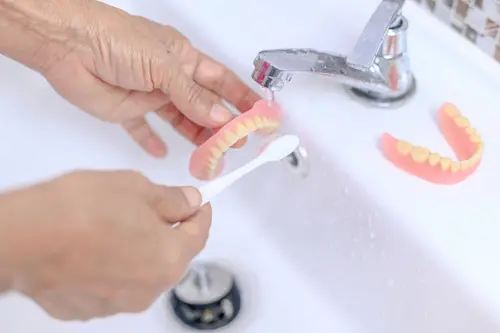
Why Food Can Collect Beneath Implant Supported Dentures
Implant supported dentures are designed for stability, not complete sealing. While implants anchor the denture in place, the prosthetic base still contacts soft gum tissue rather than attaching directly to bone.
As the gums compress during chewing, small gaps can briefly form beneath the denture. These spaces allow food particles to migrate underneath. Over time, natural changes in gum thickness and jawbone shape can slightly increase these gaps, which is expected with long-term denture wear.
Is This More Common With Certain Denture Types?
Food trapping is more common with removable implant supported dentures, often called snap-in dentures, than with fixed implant dentures. Removable designs are intentionally engineered to allow removal for cleaning, which inherently creates space between the denture base and the gums.
Fixed implant dentures typically move less and have fewer entry points for debris. Even so, food can still collect along the margins where the prosthesis meets the gum tissue.
Is Food Under Implant Dentures a Sign of Failure?
In most cases, no. Food accumulation alone does not indicate implant failure or poor treatment. Many patients with healthy, well-integrated implants experience some degree of food trapping.
Concern generally arises only when buildup is accompanied by ongoing tissue irritation, swelling, bleeding, or changes in how the denture fits. These situations suggest the prosthesis or surrounding tissue may need evaluation rather than indicating implant loss.
How Food Buildup Affects Comfort and Oral Health
When food remains under the denture for extended periods, it can irritate the gums and contribute to plaque accumulation around implants. If removal is inconsistent, this may increase the risk of localized inflammation over time.
Some patients notice unpleasant tastes or odors when debris is not removed promptly. These issues are typically related to hygiene challenges rather than the implants themselves. For patients comparing maintenance demands, Are Implant Supported Dentures Hard to Clean? explores daily care considerations in more detail.
Does Food Trapping Cause Implant Supported Dentures to Smell?
Odor is not caused by the implants. It most often results from trapped food and bacterial buildup beneath the denture base. With consistent cleaning, persistent odor is uncommon.
Patients focused on this concern often review Do Implant Supported Dentures Smell? for a more detailed discussion of causes and contributing factors.
Can Food Get Trapped Under Snap-In Dentures?
Yes. Snap-in dentures are particularly prone to food trapping because they are designed to be removable. The attachment system provides retention but does not create a tight seal against the gums.
Patients comparing removable and fixed designs often explore Can Food Get Trapped Under Snap-In Dentures? to better understand how design differences affect food accumulation.
Does This Issue Improve or Worsen Over Time?
Some patients notice improvement as they adapt to chewing with the denture and become familiar with routine care. Others experience increased food trapping years later as the gums and bone naturally change shape.
This variability is one reason implant supported dentures are considered a long-term maintenance solution rather than a set-and-forget prosthetic.
Final Thoughts
Food accumulation beneath implant supported dentures is common and influenced by denture design, oral anatomy, and long-term tissue changes. The presence of food alone does not indicate implant failure or a problem with treatment.
How this issue presents and changes over time varies between individuals. For patients exploring how design, hygiene demands, and long-term maintenance intersect, the related topics above examine these questions in greater detail.
Sources & References
- American Dental Association. Dental Implants: Benefits and Risks.
https://www.ada.org/resources/ada-library/oral-health-topics/dental-implants - Mayo Clinic. Dental implants.
https://www.mayoclinic.org/tests-procedures/dental-implant/about/pac-20384622 - American College of Prosthodontists. Implant Overdentures.
https://www.gotoapro.org/dental-problems-and-solutions/implant-overdentures/