
Tooth loss can be a distressing experience. It affects more than just appearance—it can change how you eat, speak, and feel about yourself.
Fortunately, modern dentistry offers reliable tooth replacement options. Two of the most common solutions are dentures and dental implants.
Each option has advantages and limitations. Understanding the differences can help you choose the solution that best fits your health, lifestyle, and long-term goals.
This guide compares dentures and dental implants based on function, appearance, cost, and maintenance so you can make a confident, informed decision.
Understanding Tooth Replacement
Tooth replacement restores missing teeth with artificial ones to protect oral health and function.
When teeth are missing, nearby teeth can shift. Over time, this can affect your bite, speech, and jawbone health.
Why Replace Missing Teeth?
Replacing missing teeth supports both function and long-term oral health.
Without replacement, patients may experience:
- Difficulty chewing certain foods
- Changes in speech
- Jawbone loss
- Facial sagging over time
Restoring missing teeth helps prevent these complications.
Options for Tooth Replacement
Several tooth replacement options are available. The right choice depends on how many teeth are missing, oral health, and budget.
Common options include:
- Dentures (complete or partial)
- Dental bridges
- Dental implants
- Implant-supported dentures
Dentures as a Tooth Replacement Option
Dentures are removable prosthetic devices designed to replace missing teeth.
They are custom-made to fit the mouth and resemble natural teeth. Dentures can be removed for cleaning and overnight wear.
However, dentures do not anchor into the jawbone. This can lead to movement, reduced chewing efficiency, and pressure on the gums.
Despite these limitations, dentures remain popular due to affordability and the lack of surgery.
Types of Dentures
There are two main types of dentures: complete and partial.
Complete dentures are used when all the teeth are missing and partial dentures are used when some natural teeth remain.
- Complete Dentures: These replace all teeth in the upper or lower jaw.
- Partial Dentures: These replace one or a few missing teeth.
Pros and Cons of Dentures
Pros
- Lower upfront cost
- Non-surgical
- Faster initial treatment
Cons
- Often require replacement every 5–10 years
- May slip or shift
- Can limit food choices
- Do not prevent jawbone loss
Maintenance and Care for Dentures
Dentures require daily cleaning to remove plaque and food debris.
They should be handled carefully and stored in water or a denture solution when not in use. Regular dental visits are still important to monitor gum health and fit.
Dental Implants: A Permanent Solution
Dental implants replace missing teeth by anchoring artificial roots directly into the jawbone.
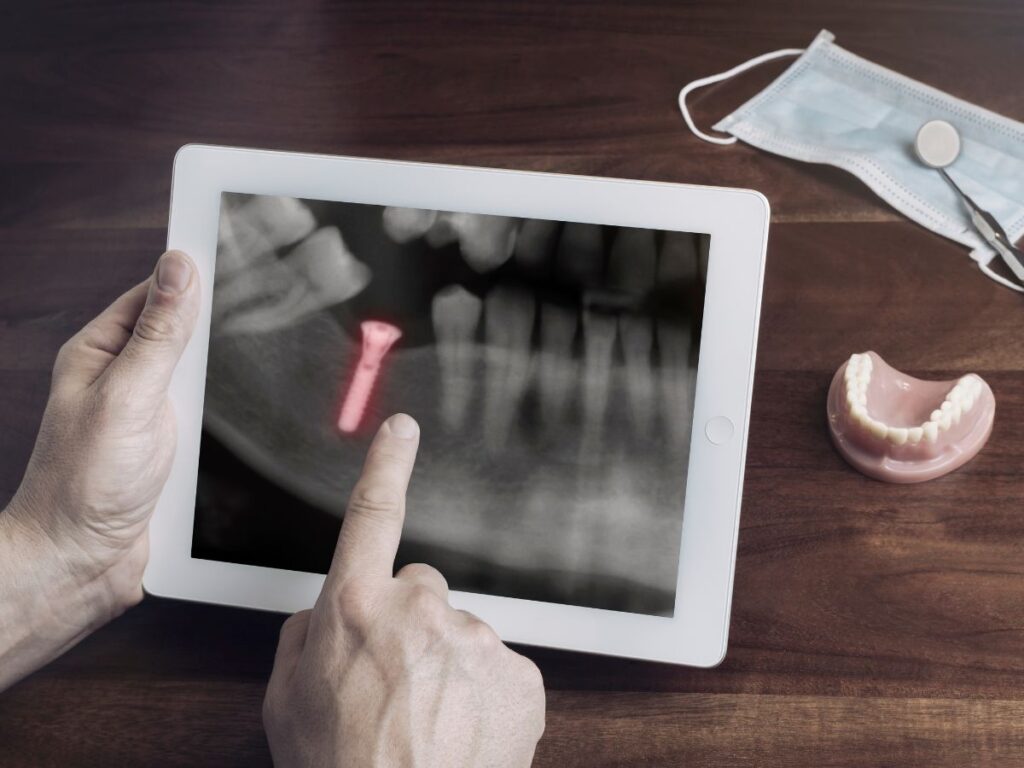
Because implants fuse with the jawbone, they provide stable, non-removable support for replacement teeth. This stability improves comfort, chewing ability, and speech.
Dental implants also help preserve jawbone structure, reducing bone loss over time.
The Dental Implant Procedure
The dental implant process occurs in stages.
First, a small titanium post is placed into the jawbone. During healing, the bone bonds with the implant in a process called osseointegration.
After the implant has bonded to the jawbone, a small connector post, called an abutment, is attached to the post to securely hold the new tooth.
Pros and Cons of Dental Implants
Pros
- Feels and functions like natural teeth
- Does not slip or move
- Preserves jawbone
- Can last decades or longer
Cons
- Longer treatment timeline
- Higher upfront cost
- Surgical procedure required
Maintenance and Care for Dental Implants
Dental implants are cared for like natural teeth.
Daily brushing, flossing, and regular dental visits are essential. While implants cannot decay, gum inflammation around implants can occur without proper care.
Cost Comparison: Dentures vs. Dental Implants
Dentures typically cost less upfront. However, adjustments, relines, adhesives, and replacements add ongoing expenses.
Dental implants cost more initially, but their durability often makes them more cost-effective long term.
Quality of life is also an important consideration. Many patients find implants worth the investment due to comfort and stability.
Initial Costs vs. Long-Term Value
Dentures may need replacement every few years as the jawbone changes shape.
Dental implants, with proper care, can last decades and reduce future dental expenses related to bone loss and instability.
Insurance and Financing Options
Insurance coverage varies. Dentures are more commonly covered, while implants may be partially covered or excluded.
Many dental offices offer financing plans, and third-party lenders can help spread costs over time.
Making the Right Choice for Your Needs
Choosing between dentures and dental implants is a personal decision. It depends on your oral health, budget, and lifestyle.
Remember, what works for one person may not work for another. It’s about finding the best solution for your unique needs.
Consultation with a Dental Professional
Before making a decision, it’s crucial to consult with a dental professional. They can assess your oral health and discuss the best options for you.
They can also answer any questions you have. This will help you make an informed decision about your tooth replacement.
Personal Considerations and Lifestyle Factors
Your lifestyle and personal preferences also play a role in your decision. If you lead an active lifestyle, dental implants may be a better fit.
Consider your comfort, convenience, and the impact on your daily life. These factors can help guide your decision between dentures and dental implants.
Frequently Asked Questions
Are dental implants better than dentures?
Dental implants offer greater stability, comfort, and jawbone preservation. Dentures may be suitable for some patients, but implants are often considered the long-term gold standard.
What is the cheapest tooth replacement option?
Dentures usually have the lowest upfront cost. However, implants often provide better long-term value due to durability.
Conclusion
Choosing the right tooth replacement option is an important decision that affects comfort, confidence, and oral health.
Whether you choose dentures or dental implants, the goal is the same: restoring function and quality of life. A professional consultation can help you choose the option that best supports your long-term health.
Sources
- American Dental Association (ADA) – Tooth Replacement Options
https://www.ada.org/resources/ada-library/oral-health-topics/dentures
https://www.ada.org/resources/ada-library/oral-health-topics/dental-implants - Mayo Clinic – Dental Implants
https://www.mayoclinic.org/tests-procedures/dental-implant-surgery/about/pac-20384622 - Cleveland Clinic – Dentures vs. Implants
https://my.clevelandclinic.org/health/treatments/10948-dental-implants - National Institutes of Health (NIH / PubMed) – Implant Outcomes
https://www.ncbi.nlm.nih.gov/pmc/articles/PMC5806927/